From the Subways to the Museums: How Street Art Rewired the Way I See Everything
- joie

- Mar 3
- 5 min read
A City Kid’s Awakening
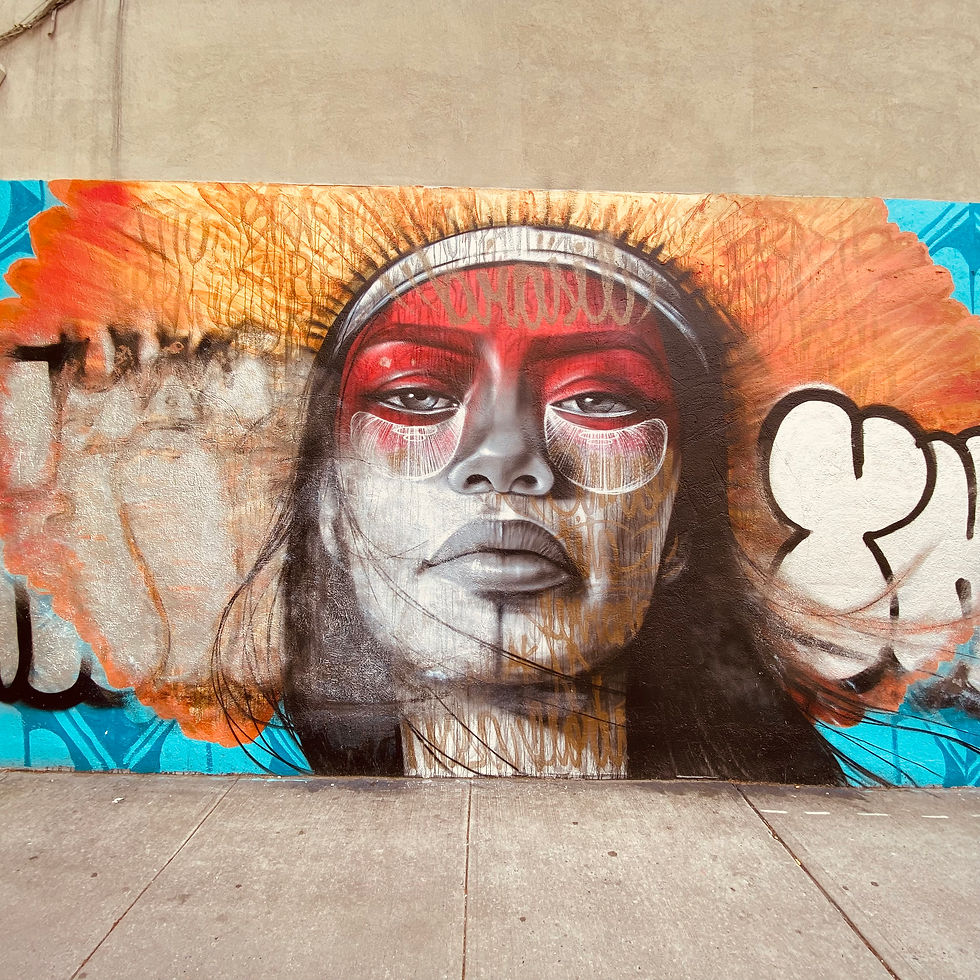
Growing up in New York City, art was never something I had to seek out—it found me on every corner, every subway platform, every shuttered storefront. But the moment my eyes truly opened was in 9th grade, when my classmate David Ventura introduced me to the world of graffiti. David’s tag was unmistakable—his handle fused with the Puerto Rican flag, a declaration of identity and pride that marked every surface he touched. Suddenly, a whole new world cracked open. I started walking the streets with a completely different lens, reading the city like a living gallery. We stuck together in school, a crew of creatives who lifted each other up, and without knowing it, I was developing an eye—learning how to see, how to give real, honest feedback. I tried my hand at graffiti myself. It wasn’t for me, but it ignited a love for typography that has never left.
“I’ve never really considered myself just a street artist. I consider myself a populist.” — Shepard Fairey

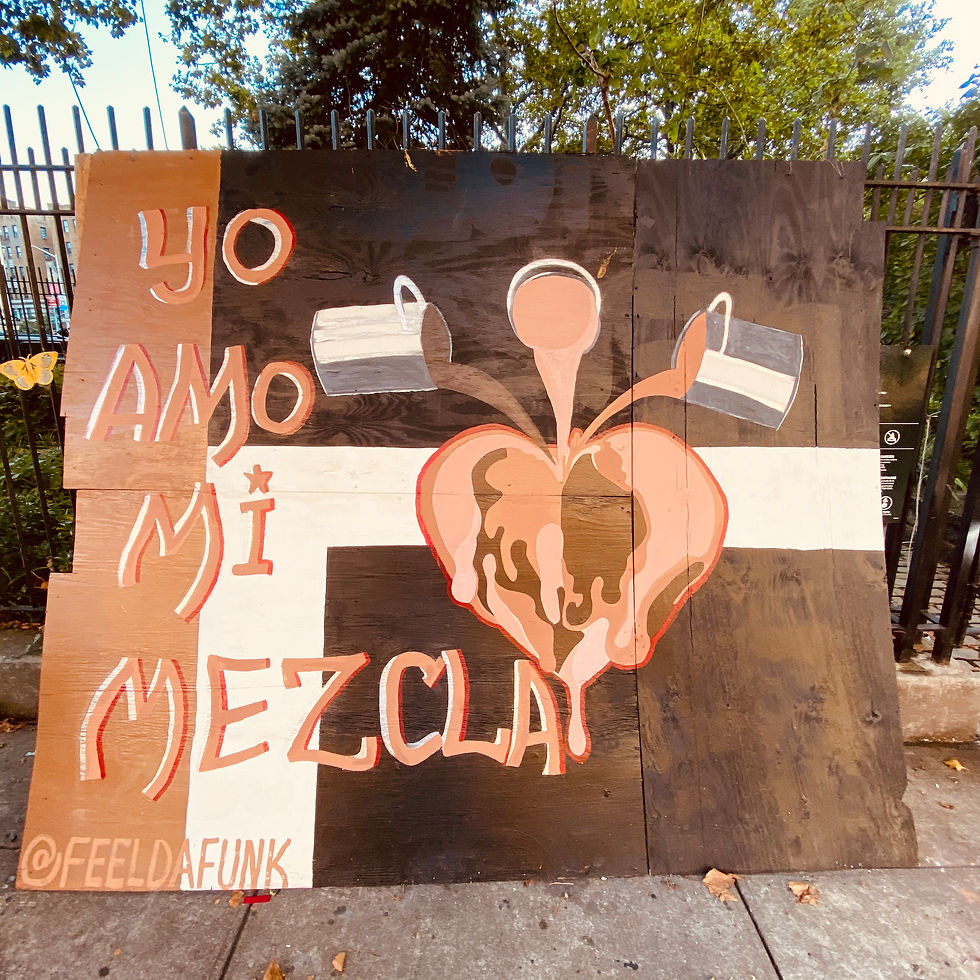
By 11th grade, I’d joined CityKids Foundation and had the extraordinary experience of meeting Keith Haring, whose radiant energy and belief that art belonged to everyone expanded my worldview exponentially. Years later, during the Black Lives Matter protests of summer 2020, I witnessed that same spirit resurface when businesses across Manhattan boarded their windows and invited artists to transform the plywood into canvases. SoHo and NoHo became open-air museums of more than 200 works. The art was extraordinary—raw, urgent, and deeply beautiful.
“Graffiti is one of the few tools you have if you have almost nothing. And even if you don’t come up with a picture to cure world poverty you can make someone smile while they’re having a piss.” — Banksy

From Vandalism to Validation
Modern street art was born in the late 1960s on the streets of Philadelphia and New York City, where young people from marginalized communities began tagging walls and subway cars to claim visibility in a city that ignored them. Early pioneers like Cornbread in Philadelphia and TAKI 183 in Washington Heights turned name-writing into a cultural movement. By the 1970s, NYC subway trains became rolling canvases, and by the 1980s, the art world could no longer look away. Galleries and curators who had dismissed graffiti as vandalism began recognizing the raw talent emerging from the streets. Jean-Michel Basquiat and Keith Haring were among the first to cross that bridge—moving from the sidewalks into SoHo galleries and, eventually, major museums. The 1984 publication of Subway Art by Martha Cooper and Henry Chalfant became a global bible for the movement, spreading NYC’s graffiti culture worldwide. Today, cities like Berlin, London, São Paulo, and Melbourne are major street art hubs, and institutions from the Tate Modern to Amsterdam’s STRAAT Museum have dedicated exhibitions to the form.


Top 5 Street Artists
Jean-Michel Basquiat — Starting as the anonymous SAMO tagger in lower Manhattan, Basquiat fused graffiti’s raw energy with neo-expressionism, crowns, skulls, and biting social commentary. His explosive rise from the streets to gallery stardom in the early 1980s fundamentally changed who the art world considered an artist.
Keith Haring — Known for his bold, graphic chalk drawings in NYC subway stations, Haring created an instantly recognizable visual language of radiant babies, barking dogs, and dancing figures. He pioneered the idea that art should be accessible to all, opening the Pop Shop and collaborating with communities worldwide.
Banksy — The anonymous British stencil artist became the world’s most famous street artist through witty, politically charged works that appear overnight on walls from Bristol to Bethlehem. His stunts—including a painting that self-shredded at auction—have made him a cultural phenomenon who bridges street art and mainstream consciousness.
Shepard Fairey — The creator of the iconic “OBEY” campaign and the Barack Obama “HOPE” poster, Fairey blends street art’s guerrilla spirit with graphic design’s precision. His work bridges propaganda aesthetics and pop culture, making him one of the most commercially influential street artists alive.
Blek le Rat — Often called the “father of stencil graffiti,” this Parisian artist pioneered the stencil technique in the early 1980s, creating life-size figures on city walls that directly influenced Banksy. His rats became symbols of urban survival and artistic rebellion, laying the groundwork for the global street art movement.

Why the Walls Still Matter
Street art matters because it is radically democratic—art by anyone, for everyone, requiring no admission fee, no gatekeeping, no institutional approval. In a world increasingly mediated through screens, street art insists on the physical, the local, the present. It gives voice to communities that traditional art institutions have historically excluded, and it transforms neglected urban spaces into sites of beauty, protest, and dialogue. From the BLM murals of 2020 to the political stencils appearing on walls in conflict zones around the world, street art remains one of the most vital and relevant forms of expression in the 21st century. As Banksy once wrote, “Graffiti is one of the few tools you have if you have almost nothing.” And as Shepard Fairey put it, “I’ve never really considered myself just a street artist. I consider myself a populist.” That populist impulse—the insistence that art belongs in the streets, on the trains, on the boarded-up storefronts of a city in crisis—is what makes this movement not just enduring, but essential.
Street Art Exhibitions & Museums — 2026
Keith Haring in 3D — Crystal Bridges Museum, Bentonville, Arkansas | 2026 (dates TBA)
Basquiat × Banksy — Hirshhorn Museum, Smithsonian, Washington, D.C. | On view through 2026
URBAN NATION Museum for Urban Contemporary Art — Berlin, Germany | Permanent collection + rotating exhibitions, open year-round 2026
STRAAT Museum — NDSM Wharf, Amsterdam, Netherlands | Permanent collection of 180+ works, open year-round 2026
The Banksy Museum — New York City | Permanent immersive exhibition, open year-round 2026
Banksy Limitless — Sussex Mansions, London, UK | On view through 2026 (limited engagement)
House of Banksy — An Unauthorized Exhibition — Hanau, Germany | Extended through February 22, 2026; Mannheim & Rotterdam also on view
The Art of Banksy Without Limits — Del Mar Fairgrounds, San Diego, CA | Opening January 30, 2026
The World of Banksy — The Immersive Experience — Paris & Barcelona | Permanent museums, open year-round 2026
BEYOND THE STREETS: Post Graffiti — Southampton Arts Center, The Hamptons | Summer 2026 (dates TBA)
Venice Biennale 2026: “In Minor Keys” — Venice, Italy | Spring–Fall 2026
Sources
TheArtStory.org — Street and Graffiti Art Movement Overview
Sotheby’s Institute of Art — The Evolution of Street Art: How Graffiti Shaped Urban Culture
STRAAT Museum — History of Graffiti and Street Art: The 1960s and 1970s
CityKids Foundation
Museum of the City of New York — Street Art (NY Responds)
Tate — Graffiti Art
Laura Rathe Fine Art — From Subversive Vandalism to Revered Art
Wikipedia — Black Lives Matter Art in New York City
Baruch College — BLM Movement Revives Street Art in SoHo

